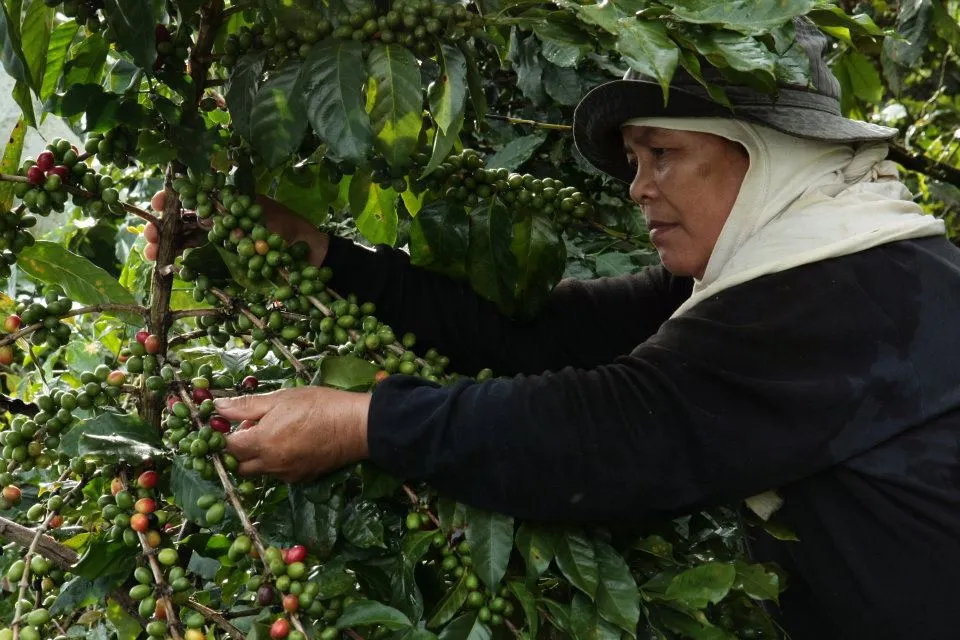
RENEWABLE energy and a just transition advocate Isabella Suarez urged all stakeholders to stay engaged and informed about upcoming developments in renewable energy and grid reform during the U.S. Embassy’s 16th Media Seminar on July 8, 2024.

Suarez, a esteemed policy analyst focusing on climate and energy issues, delivered a compelling presentation emphasizing the importance of transitioning from fossil fuels to renewable energy sources in a manner that is fair and equitable for all stakeholders involved. Suarez currently leads TransitionZero's Southeast Asia initiatives.
TransitionZero, a climate tech nonprofit, provides an essential platform for energy transition planning.
"Our goal is to make planning for the future of energy easy and effective by turning no-code analysts into expert modelers," Suarez explained.
Businesses, governments, and nonprofits use TransitionZero to make informed investments, optimize assets, and accelerate policymaking.
Suarez highlighted the urgency of moving away from polluting fossil fuels to clean, renewable sources such as marine, ocean, solar, wind, hydropower, geothermal, and bioenergy.
She pointed out that only 1% of the energy mix currently comes from these sources, which are cheap, clean, and reliable.
"The move from polluting fossil fuels to clean, green sources is a global and system-level change," she stated.
A central theme of Suarez’s presentation was the concept of a "just transition," a framework that ensures the shift to a sustainable economy considers the vulnerabilities of people, places, and the planet.
"Just transition principles encompass and consider the vulnerabilities of people, places, and the planet," Suarez noted.
This approach aims to balance technological advancements, planning, and implementation with the need to protect those most affected by the transition.
Suarez traced the historical roots of the just transition concept, which began as a labor-oriented notion when trade unions in the 1970s and 1980s called for worker protections amid new environmental regulations.
The principle of common but differentiated responsibilities (CBDR) was introduced to address macro-level injustices between countries. "CBDR remains an important concept but is only one facet of the ‘just transition’," she said.
The just transition framework was officially included in the preamble to the Paris Agreement in 2015, emphasizing the creation of decent work and quality jobs.
Suarez noted that in 2018, the Declaration on Just Transition was made at COP24, and by COP26 in 2021, countries committed to transitioning in an orderly, equitable, and just manner.
"At COP28 in 2023, 200 countries signed onto the work program on the implementation of just transition pathways through international cooperation. The Philippines is among them," Suarez added.
Ensuring a just transition involves engaging all stakeholders, including workers, communities, employers, and governments. It also requires ensuring that the benefits and burdens of transitioning to a sustainable economy are shared fairly.
"Creating quality jobs in new green industries and supporting workers transitioning from declining sectors is crucial," Suarez emphasized.
Suarez outlined the Philippine government's efforts to promote a just transition, including the Green Jobs Act of 2016, the Electric Vehicle Act, and the Energy Efficiency and Conservation Act.
These laws aim to promote sustainable growth, create decent jobs, and enhance resilience against climate change.
The Green Jobs Act, for instance, defines green jobs as employment that contributes to preserving or restoring the quality of the environment while respecting workers' rights and providing fair income and social protection.
Coordination across multiple scales and levels of implementation is needed to achieve a just transition.
Suarez highlighted the structure of Scotland’s Just Transition Plan as a model that could be adapted in the Philippines.
"National-level action, industry-level private sector action, and coordination with existing planning frameworks are essential," she said.
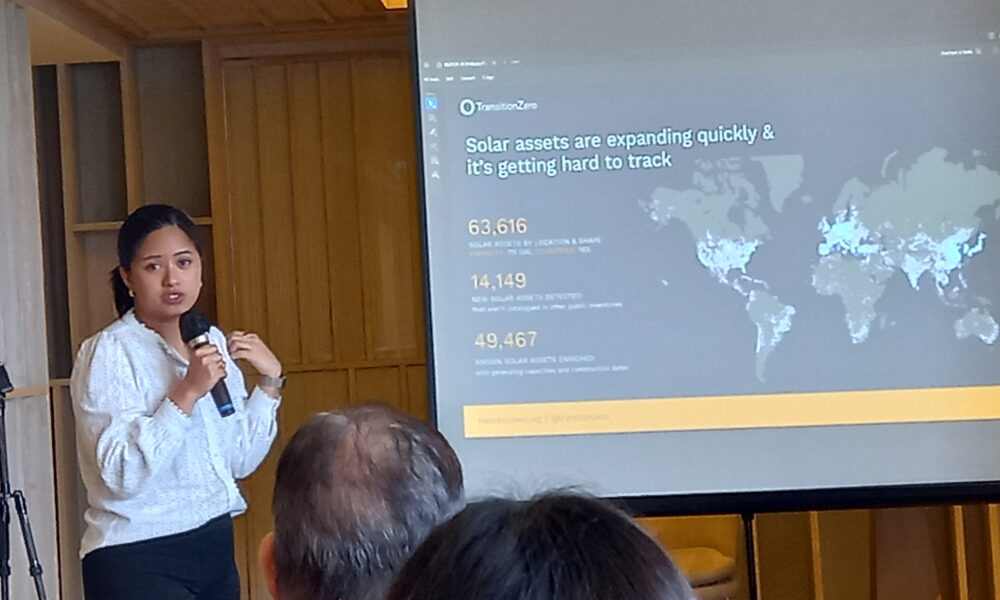
Suarez also presented data on global renewable energy trends, noting that wind and solar generation increased by 79% globally in 2022.
Despite the rapid growth, she pointed out that the sunniest countries are not necessarily building the most solar infrastructure. "The first trillion has been reached, deploying solar and wind faster than any other technology before it," Suarez remarked.
Investment in renewable energy is growing, with global capacity additions led by China and India. However, the Philippines still has significant potential to expand its renewable energy capacity, with an estimated 1,120 gigawatts from solar, onshore wind, offshore wind, hydro, and geothermal sources.
"The target is for 35% renewable energy generation by 2030 and at least 50% by 2040," Suarez stated.
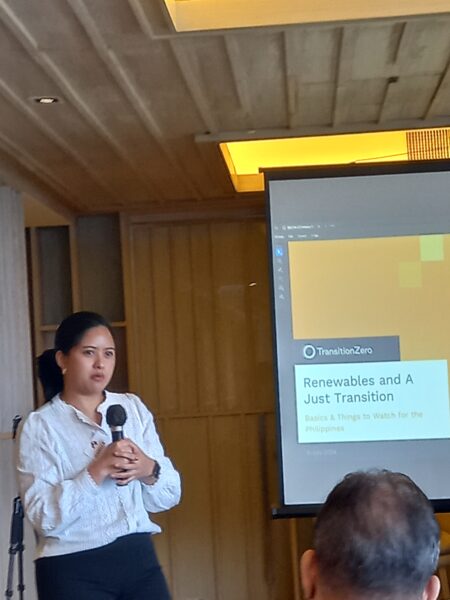
Suarez concluded by emphasizing the need for continued efforts to harmonize and operationalize renewable energy policies.
She noted significant policy shifts over the last five years, including the Renewable Portfolio Standard and the introduction of the Green Energy Auction Program.
"The groundwork has been laid to incentivize renewable energy, but barriers and challenges remain in harmonizing and operationalizing these policies," she said.