By Eman D. Pangcatan
MSU Intern
DESIGNED to keep people safe, pedestrian lanes in the city are slowly becoming silent hazards.
In a recent audit of pedestrian lanes across various highways and intersections in Cagayan de Oro, glaring issues have been identified.
What should be a protective measure for the walking public is now becoming a potential threat due to a lack of maintenance and enforcement.
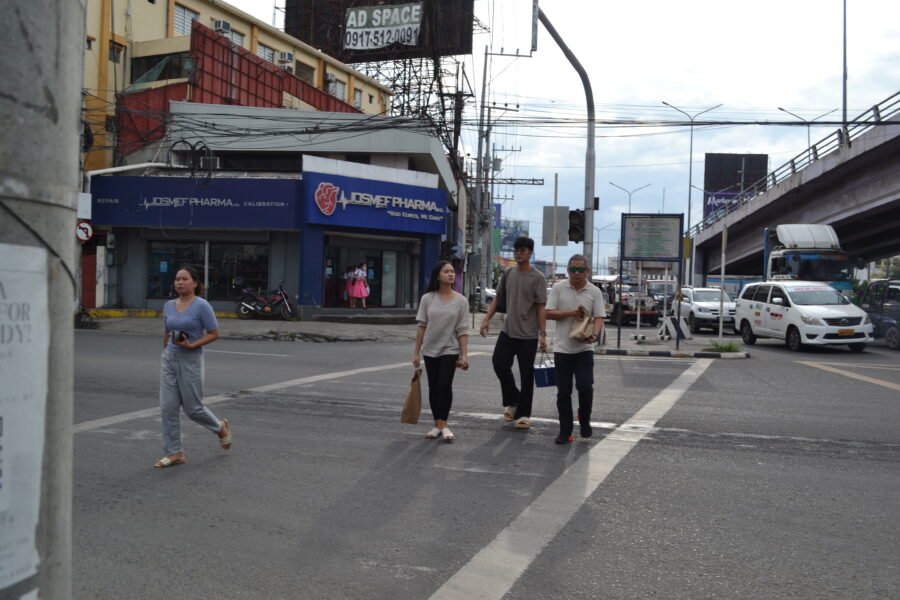
Many pedestrian lanes, particularly in high-traffic areas, have faded to near invisibility — some reduced to faint lines barely visible even in daylight.
In other spots, pedestrian lanes are completely absent despite heavy foot traffic.
These include roads near public markets, schools, government offices, and major thoroughfares, where people are forced to cross busy streets without any visual cues to alert drivers.
Exacerbating the issue is the absence of Road and Traffic Administration (RTA) personnel in some of these areas, making it even more dangerous for citizens to navigate crossings on their own.
“Murag wala na silay plano ayo. Magdali lang mi ug tabok, kay walay pedestrian lane ug walay enforcer,” said one elderly vendor near Cogon Market.
However, it’s worth noting that RTA officers are actively deployed in certain hotspots, particularly during rush hours in Cogon, especially near Ororama.
Their presence during these peak times helps manage traffic flow and assist pedestrians in crossing safely. Still, outside these peak hours and in other critical areas, enforcement remains spotty.

Data from the audit shows that even major roads such as JR Borja, Capistrano, CM Recto, and Lapasan Highway lack properly maintained pedestrian lanes.
In Lapasan — a bustling stretch that connects several barangays, commercial areas, and schools — pedestrians are often seen sprinting across multiple lanes of traffic with no pedestrian crossing in sight. For a road that experiences heavy vehicle volume, this absence is not just an oversight but a serious safety concern.
City engineers and the RTA have yet to release an updated plan for pedestrian lane maintenance. However, local advocates are calling for urgent action.
“This is a basic safety issue. We’re not asking for high-tech solutions — just fresh paint, proper signage, and consistent monitoring. That can already save lives,” said a member of a local road safety group.
The city government’s traffic code mandates regular repainting and strategic placement of pedestrian lanes, but implementation appears to be lagging.
With school season approaching and daily foot traffic rising, residents hope that this audit serves as a wake-up call before accidents multiply further.
In a city striving to become more walkable and inclusive, ignoring the very infrastructure meant to protect people sends the wrong signal — that safety is optional, and responsibility is unclear.