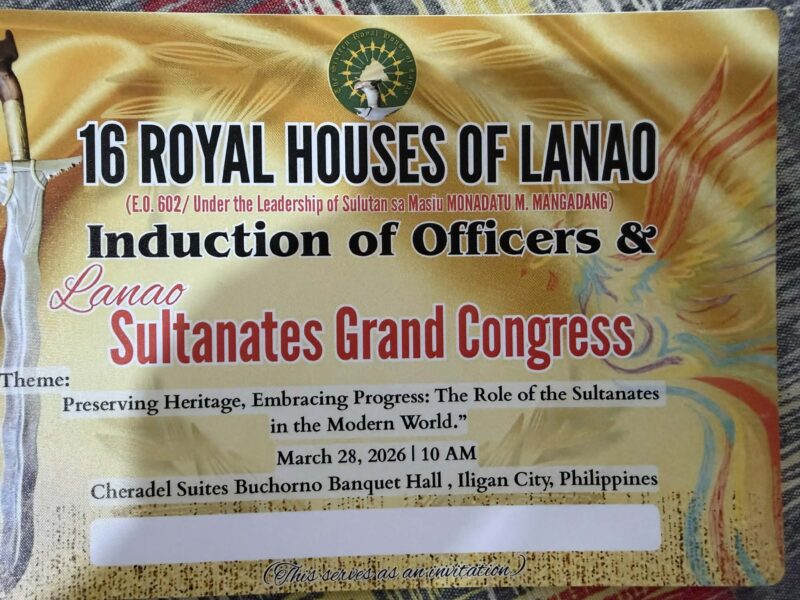
ILIGAN CITY — The 16 Royal Houses of Lanao, the highest traditional authority of the Lanao Sultanate, are set to convene the Lanao Sultanate Grand Congress alongside the 2026 induction of officers, a gathering aimed at strengthening unity and reinforcing the role of traditional leadership in peace-building and cultural preservation.
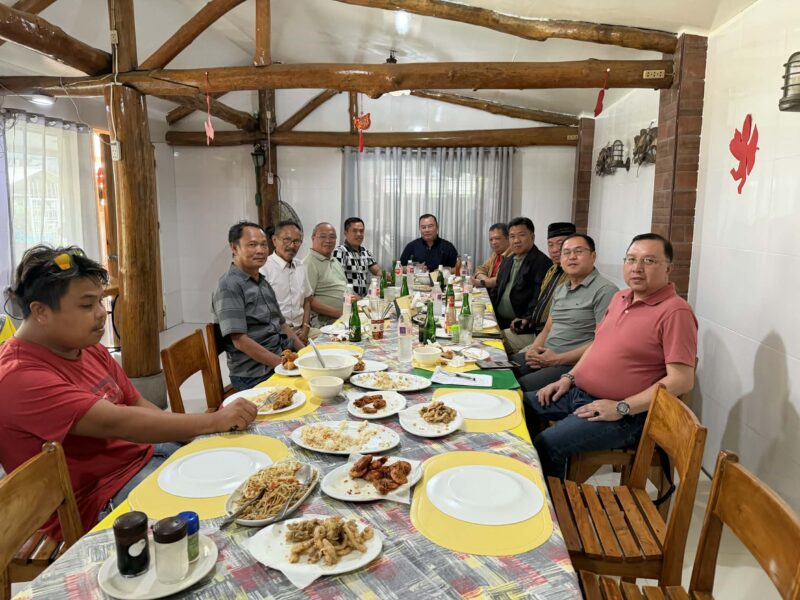
The council, composed of the 16 Panoroganan from Lanao del Sur and Lanao del Norte, recently concluded its quarterly meeting in preparation for the event.
Strengthening Maranao Unity and Tradition
Presiding over the council is His Royal Highness Sultan Monadato Mangadang, Sultan of Masiu.
Sultan Monadato Mangadang, enthroned in March 2023, currently serves as chairman of the 16 Royal Houses following his unanimous election in April 2025.
A central feature of the congress is the adoption of resolutions focused on strengthening the Sultanate institution, promoting peace and order, and preserving the cultural heritage and customary laws of the Maranao people.
Organizers say these efforts are intended to support community stability and cooperation with government initiatives.
The authority of the 16 Royal Houses is recognized under Executive Order No. 602 issued by former President Gloria Macapagal Arroyo, which designates the body as the Lanao Advisory Council.
Leadership of the 16 Royal Houses
The mandate highlights the council’s role in assisting national and local governments in areas such as peace-building and heritage protection.
Among the confirmed guests are Ariel F. Nepomuceno, commissioner of the Bureau of Customs and traditionally enthroned as Datu Rajah of the Philippines, and former chief of staff of the Armed Forces of the Philippines, General Gilbert Gapay.
The event will be held on March 28, 2026, at Cheradel Suites – Bochorno Banquet Hall under the theme:
“Preserving Heritage, Embracing Progress: The Role of Sultanates in the Modern World.”
Organizers say the congress underscores the continuing relevance of the Sultanates in fostering unity, cultural identity, and sustainable development in Lanao, while bridging traditional governance with modern community needs.